

Our emphasis has always been “Keep Feedback Simple” and you would of seen it through my social posts with the common #Keepfeedbacksimple. In just a few words, we captured a principle that resonates deeply with how we approach health — both in care and in organisational culture. Simplicity in feedback is not just a “nice-to-have” — it’s vital for building healthier systems, stronger relationships, and better outcomes.
Why Simplicity Matters for Health
Promotes a Healthy Feedback Culture
When feedback systems are overly complex — full of long surveys, rating scales, and nested forms — people tune out. But a simple feedback system encourages participation, leading to a more inclusive, continuous dialogue. Over time, this builds a culture where feedback isn’t a chore, but a natural part of improving care and operations.
Reduces Cognitive Load
In healthcare, patients are often vulnerable, stressed, and already juggling a lot. Asking for feedback should not become an additional burden. Simple, clear feedback mechanisms make it easier for patients or service users to respond honestly and thoughtfully — without feeling overwhelmed.
Enables Faster Action
A streamlined feedback loop means teams can more quickly interpret what’s going wrong (or right) and act on it. That’s especially important in health contexts, where delays in hearing and acting on feedback could have serious implications for patient safety, care quality, or wellbeing.
Strengthens Trust
When people feel that their voices are heard — and that their feedback leads to real change — trust builds. In healthcare, trust is fundamental. By keeping feedback simple and then closing the loop, we signal that we value the lived experience of every patient or staff member.
Our Commitment: Health Through Simplicity
At Push My Button, we take these words seriously. Here’s how we’re putting this principle into practice:
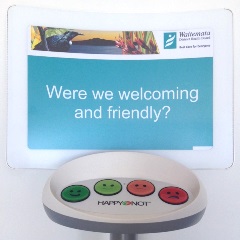
- Micro-Feedback Tools: We use “micro-feedback” — short, context-rich prompts (e.g., “How was your check-in today?”) — so patients and staff can share insights in the moment. This aligns with emerging CX best practices. HappyOrNot
- Closed-Loop Systems: Feedback doesn’t disappear into a void. The simple to use tools enable your teams to actively review, acknowledge, and follow up. That’s what closed-loop feedback is all about.
- Health-Focused Metrics: We track not only satisfaction but more meaningful health-related outcomes — such as how changes driven by feedback improve care delivery, reduce adverse events, and enhance patient experience.
- Continuous Learning: Every piece of feedback is an opportunity. We analyse trends, identify pain points, and prioritise actions that will genuinely make care safer and more compassionate.
The Link to Patient Experience
Patient experience is more than satisfaction. It’s about the interactions people have with the entire health system — clinicians, administration, care journeys. By simplifying how we gather and act on feedback, we make it easier to measure and improve real patient experience in a meaningful way.
Research and health-quality bodies back this up: a strong consumer (or patient) experience is correlated with better clinical, financial, and satisfaction outcomes. hqsc.govt.nz When we pay attention to what people tell us — and act on it quickly — we’re not just doing “customer service.” We’re improving health.